
Free The Land.
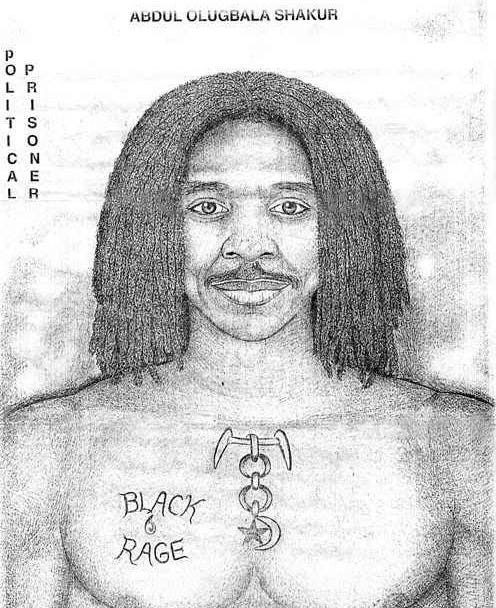
I want to address something that was brought to my attention by my elder-comrad Abdul Olugbala Shakur concerning his parole case and the continuing use of his alleged affiliation with the Black Liberation Army as part of the argument against his release.
I believe this deserves serious examination—not only because of Abdul’s individual situation, but because it raises a broader question concerning New Afrikan revolutionary prisoners who have spent decades inside U.S. prisons:
At what point does the state stop judging the person who stands before the parole board today and stop judging him primarily through the political identity and organizations associated with his past and make the decision of parole based what this elder can contribute to New Afrikan/Black communities and what he has already contributed through books, writings and programs that can build sustainable institutions when he's released.
In my viewing of the transcript from one of his parole proceedings. In a portion highlighted, the District Attorney discusses his alleged membership in the Black Liberation Army and connects statements attributed to him to ideas of vigilantism, antisocial behavior, disrespect for governmental authority, and violence.
This is the District attorney exact words about Abdul “ Really the reason. He still doesn't know where the violence and anger came from on the streets. He was a member of the Black Liberation Army.
On the CRA, On Page 4 he said, quote, We would patrol the street," end quote. Well, that sounds like somebody who was out as a vigilante. I mean, being antisocial, living by their own laws. "I'm not gonna respect the laws of the state. The city, the community, the, the state I'm in, I'm gonna - I have my own laws. ”
The important point is not simply that these statements were made.
The important point is that the statements are being brought forward and presented within a contemporary argument concerning whether Abdul remains a threat.
That deserves scrutiny.
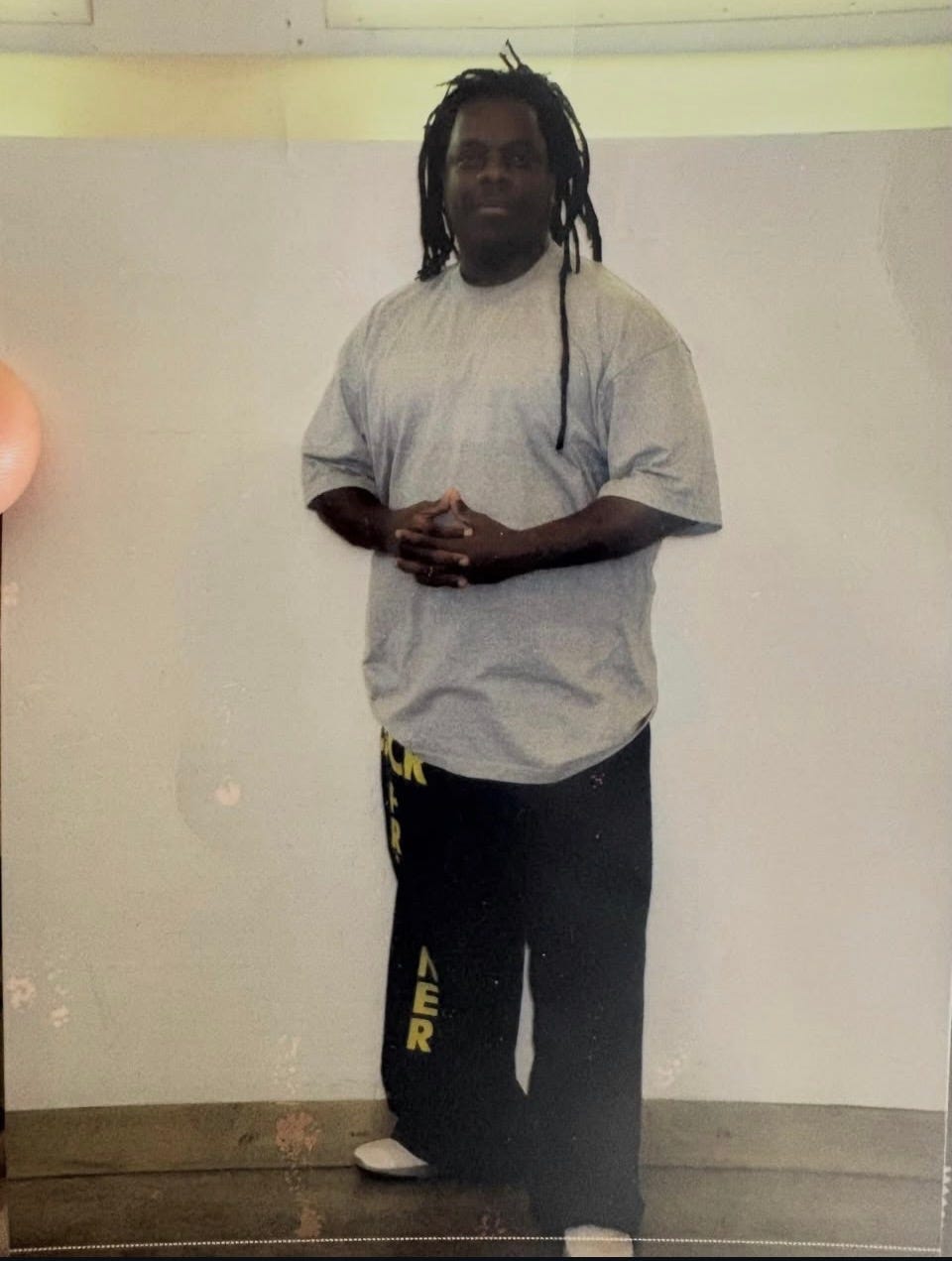
Forty Years Later, the B.L.A. Is Still Being Placed on the Parole Scale
When we look at the language contained in the transcript, the B.L.A. is not treated merely as historical background.
The organization becomes part of the argument used to interpret Abdul’s character and present-day risk.
That distinction matters.
There is a fundamental difference between saying:
This person was involved in conduct that resulted in a criminal conviction.
and saying:
This person’s historical association with a revolutionary organization demonstrates that he remains dangerous today.
Those are two different propositions.
The first concerns a historical criminal case.
The second requires evidence concerning the person’s present condition, conduct, circumstances, and risk.
That is where I believe Abdul’s statement raises an important question.
If someone has spent more than four decades incarcerated, shouldn’t the parole process distinguish between the political identity and circumstances and the actual person who is standing before the board today?
That does not mean history should be erased.
It means history should be placed in its proper context.
The Organization Cannot Become a Substitute for Examining the Individual
One of the most troubling aspects of this issue is the possibility that an organization can become a permanent label for parole denials of New Afrikan Political Prisoners or Politicized Prisoners.
B.L.A.
Black revolutionary.
New Afrikan.
Political Prisoner.
Prisoner of War.
Black Extremist Identity.
BGF.
Once those labels enter an institutional record, they can potentially be repeated from one proceeding to another until the label itself begins functioning as evidence as evidence, a life sentence and repeated denials of parole.
That is the question I want us to examine.
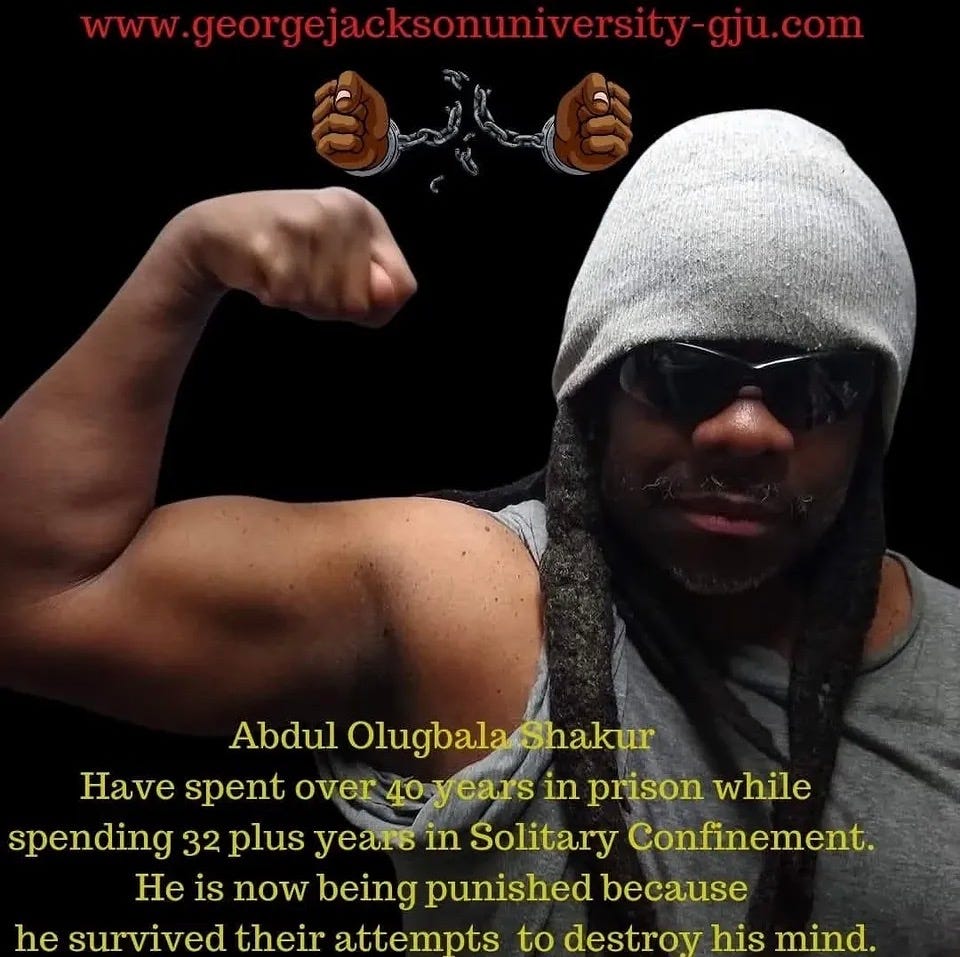
Is Abdul being evaluated as Abdul—or is Abdul continually being evaluated through what the state believes the letters B.L.A. represent?
Those are not necessarily the same thing.
The transcript does not by itself establish what every parole board has considered in every proceeding, nor does it establish that every denial was based on his alleged B.L.A. affiliation. But it does document that the B.L.A. affiliation and statements associated with it were discussed in a parole context.
That fact deserves attention.
The Historical Political Context Cannot Simply Be Removed
There is also a larger historical context that cannot honestly be separated from this discussion.
The federal government itself documented its targeting of Black nationalist organizations during the COINTELPRO era. An FBI memorandum from February 23, 1968, described a program intended to “neutralize” militant Black nationalist groups and specifically discussed preventing coalitions among those organizations and preventing them from gaining respectability or growing among young people.
That does not mean that every person associated with a Black revolutionary organization was innocent of criminal conduct, But we know why do to infiltration throught agents provocateurs who committed crimes to frame, sabotage, neutralize and set up black revolutionaries, so the facts are many were criminalized do to their revolutionary organization affiliations or memberships alone.
It does mean that the historical record demonstrates that Black revolutionary organizations were treated by federal law enforcement as political-security targets.
Therefore, when the political identity of a prisoner is brought into a parole proceeding decades later, it is legitimate to ask exactly what is being evaluated.
Are authorities evaluating a person’s present-day behavior?
Or are they continuing to attach significance to an continuum of criminalization of political classification?
That distinction needs to be made carefully.
The Word “Extremist” Deserves Examination
This is also why I believe we have to pay attention to the terminology surrounding New Afrikan revolutionary prisoners.
The FBI’s historical records themselves use the category “Black Extremists” in connection with its counterintelligence activities.
That recent historical terminology cannot automatically be treated as proof of current dangerousness.
A political label is not itself a risk assessment.
An organizational affiliation is not automatically a measurement of a person’s present conduct.
And an ideological belief does not, by itself, tell us what a person will do tomorrow that they quote say is a danger upon being released.
Those things cannot continue to be used intentionally as historical facts. They are not evidence of one's present-day behavior.
That is the distinction that I believe must remain visible.
Who Is Abdul Olugbala Shakur Today?
This is where the discussion needs to move.
Instead of stopping at:
Who was Abdul associated with?
we should also ask:
Who is Abdul today?
What has he done during the decades he has been incarcerated?
What has his institutional record demonstrated?
What is the people's record he's been incarcerated with and the ones he has inspired and the lives he has helped change beyond the prison walls?
What education has he pursued?
What relationships has he maintained?
What responsibilities has he accepted?
What has his conduct been?
What does his release plan look like?
What evidence exists concerning his present-day risk?
What has changed between the person who entered prison decades ago and the person appearing before the parole authority today?
Those questions do not erase the past.
They place the past alongside the present.
And that distinction is essential whenever the question before a parole authority is whether someone can safely return to society.
This Is Bigger Than Abdul
For me, Abdul’s case raises a question concerning an entire generation of New Afrikan revolutionary prisoners.
There are men and women whose names became associated with organizations such as the Black Panther Party, the Black Liberation Army, the Republic of New Afrika, BGF and other revolutionary formations during periods of intense political conflict.
Some were convicted of serious crimes they never committed.
Some maintain political identities connected to those movements.
Some identify themselves as political prisoners or prisoners of war.
But regardless of what terminology one accepts, there remains a basic question:
Can a person’s political history become a permanent justification for incarceration independent of an individualized examination of who that person has become?
That is the question I believe deserves examination.
The Jalil Muntaqim Experience Shows Why This Question Matters
This is not an abstract issue.
Jalil Abdul Muntaqim’s parole history provides a documented example of how political affiliation became part of a long-running parole controversy. He was released to parole in October 2020 after nearly five decades in prison.
Reporting on his parole struggle also documented repeated parole denials and the controversy surrounding his history as a former Black Panther and B.L.A. member.
More specifically, reporting on litigation surrounding his parole stated that a New York judge ruled in 2020 that his Black Panther membership or self-identification as a political prisoner could not itself be used as the basis for denying him parole. The same reporting described evidence concerning his education, mentoring, prison conduct, and other activities.
Whatever one’s political interpretation of Jalil’s history, that case illustrates the importance of separating political identity from individualized assessment.
That is precisely why Abdul’s transcript deserves attention.
A Political Identity Should Not Become a Permanent Criminal Classification
There is another distinction that needs to be made.
I am not arguing that a person’s political beliefs should make them immune from accountability or if there's any accountability to be accountable for.
I am arguing that political identity and present-day dangerousness are different questions.
A person can have a revolutionary political history and still be evaluated according to his current conduct.
A person can maintain political beliefs and still demonstrate decades of personal transformation.
A person can refuse to renounce the political history that shaped him while simultaneously demonstrating that he is capable of living peacefully outside prison.
Those questions have to be considered separately.
Otherwise, parole risks becoming something other than an individualized assessment.
It risks becoming a mechanism through which a person is continually punished for the political identity attached to his history.
The Prisoner Should Not Have to Become Politically Invisible to Be Considered Rehabilitated
This is another issue I believe deserves discussion.
If the implicit expectation is that a revolutionary prisoner must completely disassociate himself from his political history before his rehabilitation will be recognized, then we have to ask what exactly is being measured.
Is rehabilitation measured through conduct?
Or is it measured through political conformity?
Those are very different standards.
A person should be able to acknowledge his history without that acknowledgment automatically becoming proof that he remains dangerous.
Likewise, maintaining a political philosophy should not automatically be equated with maintaining a willingness to engage in criminal conduct.
The two must be distinguished.
The Real Question
For me, the real question surrounding Abdul’s case is not:
“Was the B.L.A. revolutionary?”
Nor is it:
“Was the B.L.A. controversial?”
Those are historical and political questions that can be debated separately.
The parole question is much narrower:
Does Abdul Olugbala Shakur, as the person he is today, present a current basis for continued incarceration—and what evidence supports that conclusion?
That is the question I want examined.
If historical B.L.A. affiliation is being used as evidence, then we should examine precisely how it is being used.
If the word “extremist” is being invoked, we should ask what definition is being applied.
If statements from more than forty years ago are being cited, we should ask what relationship those statements have to present-day conduct.
And if revolutionary organizations are being invoked as evidence of continuing danger, we should ask whether the organization itself is being substituted for an individualized examination of the prisoner.
The Struggle Is Also Over the Meaning of the Record
One of the most powerful things about this transcript is that it allowed me to see how historical language can continue traveling through institutions.
A statement can be made at any point now or even decades ago enters a transcript.
The transcript enters a parole record.
The parole record becomes part of another hearing.
The historical affiliation gets repeated.
And eventually the historical label can appear to carry its own weight.
That is precisely why the record must be examined.
A label should not be allowed to become a substitute for evidence.
And history should not automatically become a permanent sentence.
The question is not whether Abdul has a history.
Of course he does.
The question is whether the parole process is adequately distinguishing the history and criminalization of Abdul Olugbala Shakur from the person Abdul Olugbala Shakur is today.
That is the issue I believe deserves public examination.
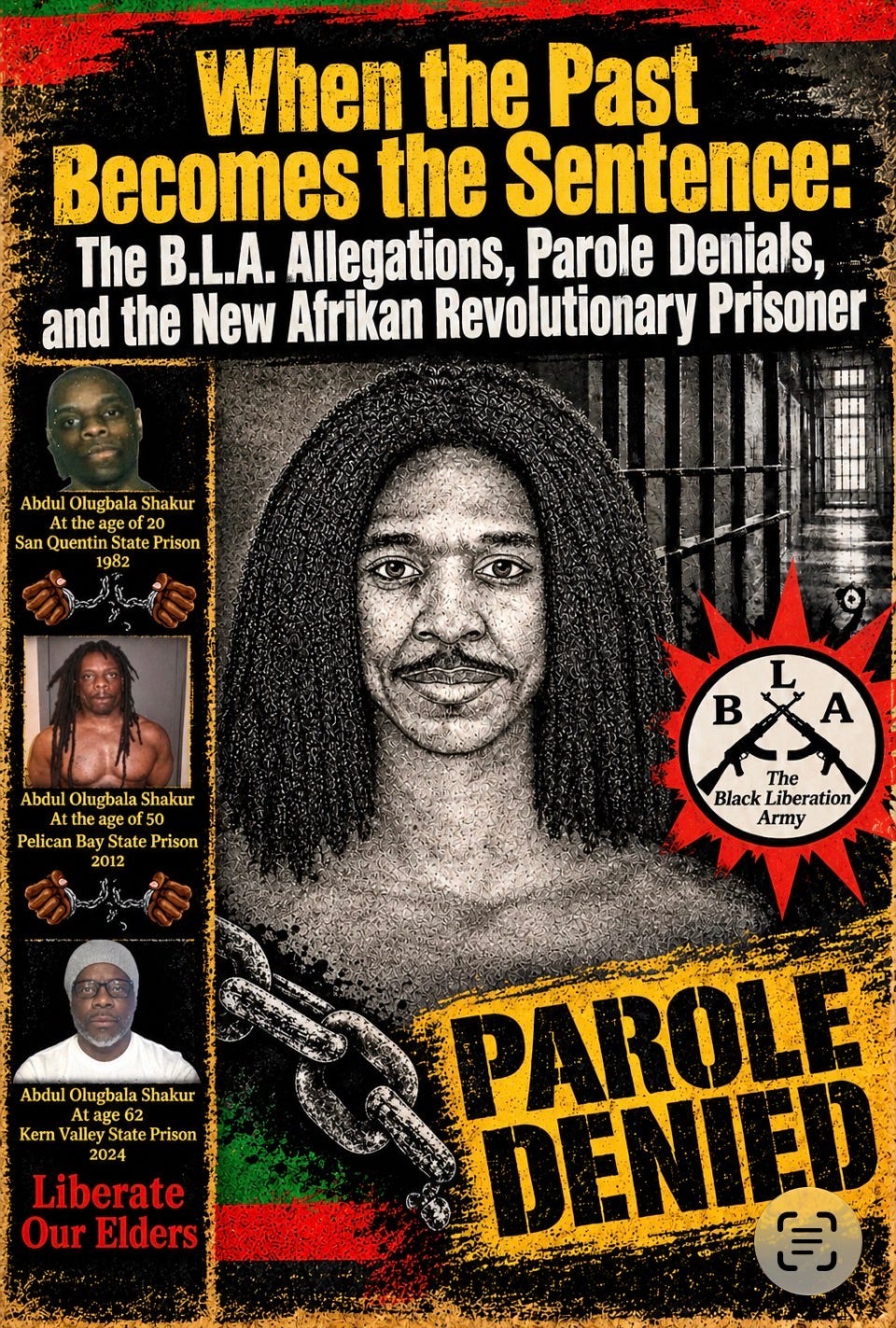
Free The Land.
We remember the history.
We examine the record.
We distinguish the targeted criminalization from who Abdul is in present.
And we demand that the individual be seen beyond a alleged political label of B.L.A. attached to his name.
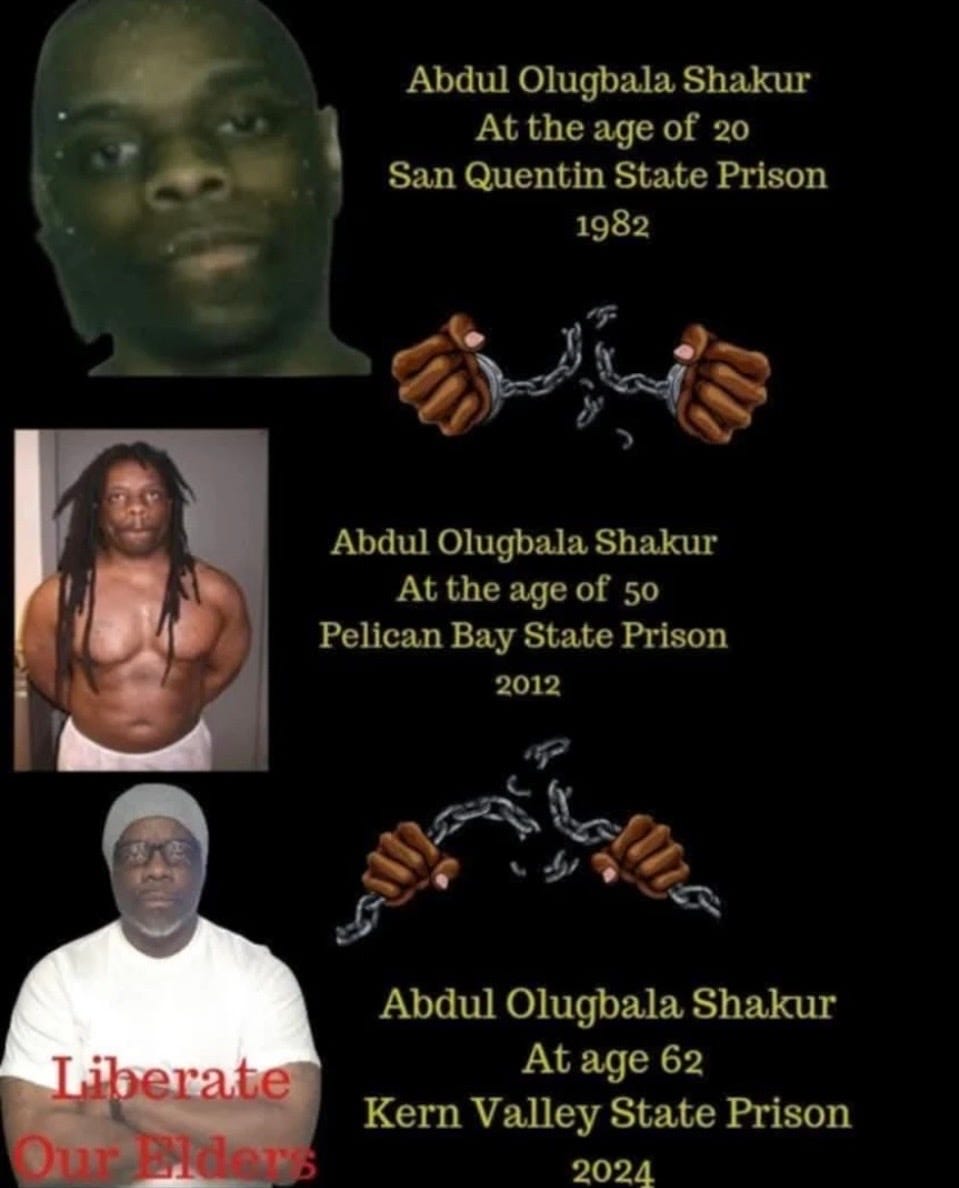
Abdul Olugbala Shakur
(James Harvey)
Kern Valley State Prison B-2-128 P.O. Box 5102 Delano, CA 93216 United States
Despite expected violence, human rights violations and denial of his freedom by the state and CDCr, he, along with his New Afrikan Brothas, practiced Black August year after year; participated in the Historic California Hunger Strikes, to which they committed to their death, if necessary. Abdul engaged in the class action lawsuit, Ashker v Brown, to end indefinite solitary confinement, demonstrating the ability and need to build unity with outside orgs, activists, etc. to build power and win, and he was the mastermind behind the original concept of the Agreement to End Hostilities – the most important document of the past 50 years. So powerful, CDCr undermined its implementation into California’s prisons, but it couldn’t be stopped – wherever it was, violence decreased significantly.
Abdul Olugbala Shakur was told the only way to escape the torture of the SHU was to “parole, snitch or die.” He stood firm against all those dehumanizing options to maintain his humanity, follow in the footsteps of his Ancestors and continue to serve the People.
Address source: The Jericho Movement
Haki Kweli Shakur
August Third Collective & New Afrikan Freedom Campaign
Sept 23, 61ADM
(George Jackson Day)
Stand Up Struggle Forward! Straight Ahead!